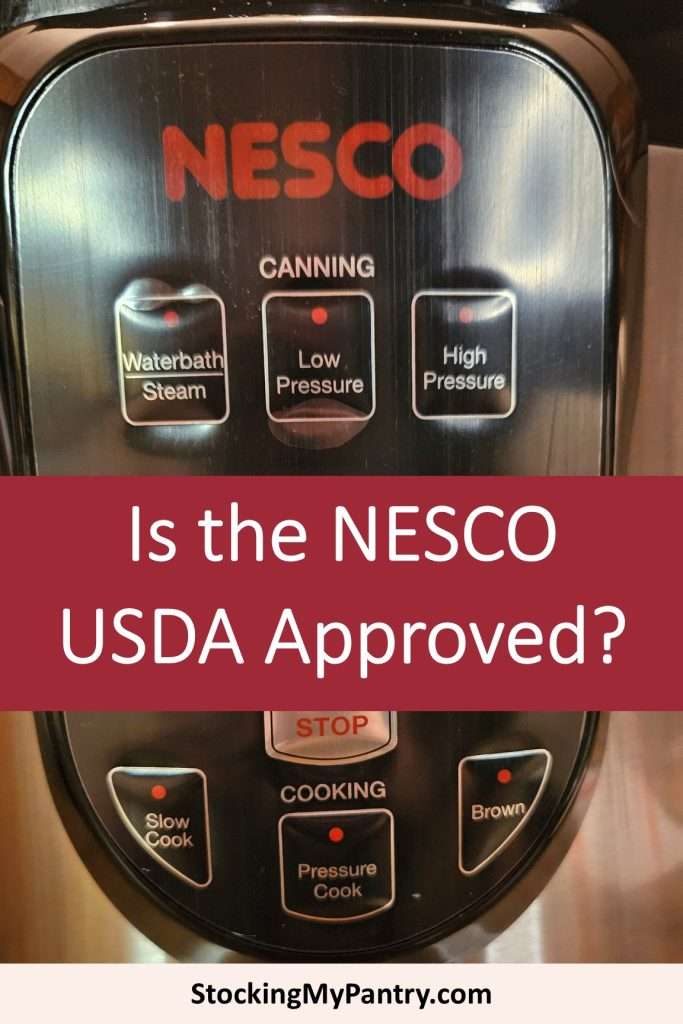
If you’ve been researching the Nesco electric canner, you’ve probably seen claims that it “isn’t USDA approved.” That can feel unsettling, especially if you’re new to electric canners or thinking about switching from a stovetop model.
I understand the concern. I’ve used the Nesco canner almost exclusively for more than five years, and it has worked well for me. Even so, questions about its safety come up often. Most of the confusion comes from misunderstood or incomplete information.
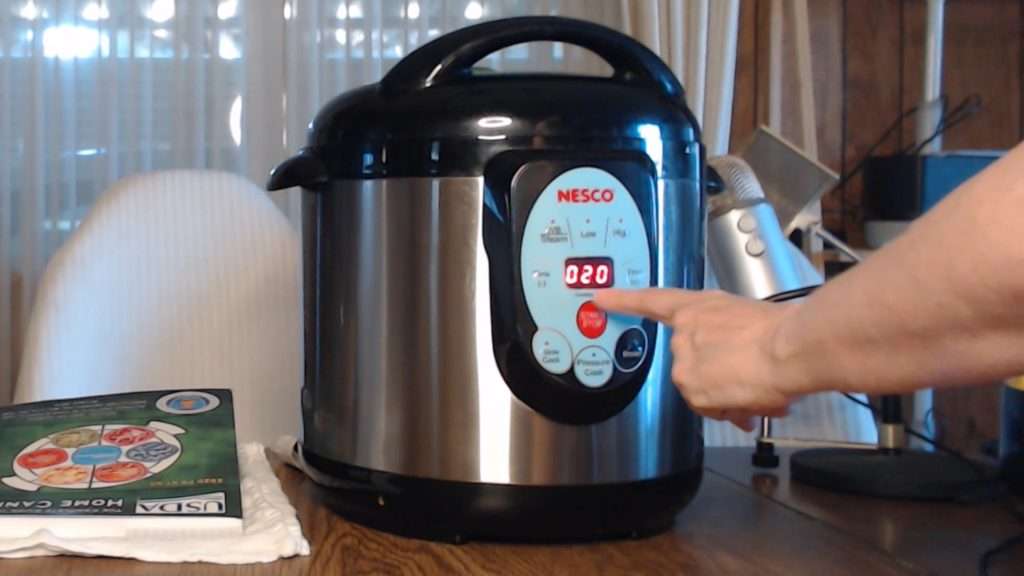
So let’s slow down and look at the question clearly: Is the Nesco canner USDA approved—and what does that actually mean? Once you understand how canning guidelines really work, the controversy starts to make a lot more sense.
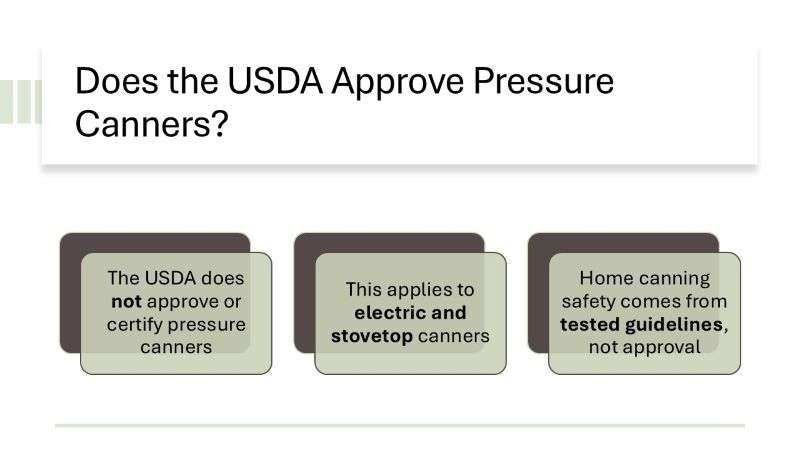
Short answer: no. The Nesco electric canner is not USDA approved—but neither is any other pressure canner. The United States Department of Agriculture does not approve or certify canners. Instead, it publishes guidelines for safe home canning. The real issue is whether a canner can meet those guidelines during normal home use.
What to know at a glance:
- The USDA does not approve pressure canners
- Safety comes from tested guidelines, not certification of specific canners
- The Nesco meets home canning guidelines

Is the Nesco Electric Canner USDA Approved?
This article includes affiliate links.
No. The Nesco electric canner (Amazon) is not USDA approved. That statement sounds alarming, but it leaves out an important fact.
The USDA does not approve or certify any pressure canners. It does not:
- Test specific brands
- Endorse individual models
- Certify canning equipment
Instead, the USDA publishes research-based home canning guidelines. These guidelines cover pressure, temperature, and processing times.
Home canning safety comes from following those tested guidelines, not from an approval label.
Why People Think Pressure Canners Are USDA Approved
A lot of confusion comes from how people learn about home canning. The USDA publishes national guidelines, but most home canners never read them directly. Instead, they learn through extension offices, classes, articles, and from YouTubers or bloggers just like me. :)
Over time, that can blur the lines. When an extension office recommends one type of canner or cautions against another, it can sound like official approval (or condemnation). In reality, extension offices interpret research and offer guidance. They do not approve equipment.
Traditional stovetop pressure canners add to the confusion. People have used them for decades with good results. Because they appear in USDA-tested recipes, many assume they must be “approved.”
That assumption makes sense—but it isn’t how the system works.
Why Some Extension Offices Say the Nesco Canner Isn’t Safe
Much of the concern regarding the Nesco canner traces back to a study from Utah State University Extension. The study examined multi-use electric appliances, meaning devices designed to work as pressure cookers and in some cases, pressure canners.
The study grouped together very different appliances:
- Some units never claimed to support pressure canning
- One canner rated for low elevations was tested at high elevation
Unsurprisingly, those units failed canning tests.
The Nesco was also included. However, the published results did not clearly explain how each test was performed. The report stated only that the Nesco passed some tests and failed others. That led to broad caution rather than detailed conclusions.
When evaluated using home canning guidelines, the Nesco met all required benchmarks. Many summaries leave out that context, which fuels unnecessary fear.
What the Utah State Extension Study Actually Tested
This is where commercial and home canning standards get confused.
The Utah study evaluated appliances using commercial canning standards, not home canning standards.
The study focused on:
- Multi-use appliances
- Commercial performance benchmarks
- Requirements beyond home canning needs
Commercial standards are far stricter than home canning requirements. No home pressure canner meets them, including traditional stovetop models.
The study did not aim to determine whether a canner was safe for home use. It evaluated whether appliances could perform at a commercial level.
When compared to:
- Commercial standards → the Nesco passed some measures and failed others
- Home canning guidelines → the Nesco met all required temperature and time thresholds
Without that explanation, many people assume the Nesco failed basic safety testing. In reality, it met every requirement that applies to home canners.
Independent Testing of the Nesco Electric Canner
Because the Nesco has not undergone official laboratory testing, some home canners have tested it themselves. One of the best-known examples comes from RoseRed Homestead.
She used the same type of data logger used in the Utah study, and also mirrored the testing as closely as possible.
She tested the same types of foods:
- Green beans
- Pinto beans
- Raw-pack chicken
- Spaghetti sauce with meat
These foods represent different densities and heat-penetration challenges.
Using home canning guidelines, the Nesco (Amazon) passed every test. It consistently reached and maintained safe pressure and temperature requirements for safe home canning.
It’s important to note that these tests by home canners do not replace formal laboratory studies. They do not represent official approval. However, they do provide useful, real-world evidence for home canners.
Check out the current pricing for the Nesco canner on Amazon. If the Nesco is unavailable, I recommend the Carey canner – which is the exact same canner as the Nesco. It is also available on Amazon.
Frequently Asked Questions
Final Thoughts
People usually ask about USDA approval because they care about safety. That’s a good thing. Home canning deserves careful attention, and I applaud you for wanting to practice safe canning!
The key point is simple: the USDA does not approve pressure canners. Safety comes from following tested home canning guidelines and using equipment that can meet them.
For many people, the Nesco offers a practical alternative to heavy stovetop canners. I’ve used it for years and continue to rely on it. In fact, I love it so much that I now have four (Yes, four!) Nesco canners.
If you’d like more help, I also share step-by-step guides on how to pressure can with the Nesco and how to water bath can with the Nesco, along with troubleshooting tips. And if you still have questions, feel free to leave a comment—I’m always happy to help.
💡 New to Using the Nesco or Carey Canner?
Check out my step-by-step Nesco canner tutorials to learn how to use your electric canner with confidence.
👉 View Nesco Canner Tutorials →
Related Articles
If you enjoyed this article, you’re sure to enjoy these related articles.
Pin it for Later