

In this article I’m excited to share with you a step-by-step guide on how to properly heat your jars and water in your Nesco canner. This post was inspired by a question from one of my YouTube viewers, and I realized I hadn’t dedicated a full video or article to this topic before.
Whether you’re new to canning or looking to refine your technique, understanding the correct way to heat your jars can make a big difference in your canning success. Let’s dive in!
Heating Jars in the Nesco Canner (Video)
Here’s a video explanation and demonstration of how to heat jars and water in the Nesco canner.
The Basics of Heating Jars and Water in the Nesco Canner
This article includes affiliate links.
The process of heating your jars and water in the Nesco (or Carey) (Amazon) canner is straightforward, but it does vary slightly depending on whether you’re doing a raw pack, or hot pack recipe. Whether you’re pressure canning or water bath canning also makes a difference when it comes down to how long it takes to heat the water, since you use a lot less water with pressure canning compared to water bath canning.
Here’s a detailed breakdown.
How to Heat Your Jars When Pressure Canning in the Nesco
First, let’s talk about cold pack pressure canning recipes.
Pressure canning in the Nesco or Carey canner requires you to add 8 cups of water to your canner. Since we want to heat both the canner and the jars, I like to put 6 cups of water into the canner. Then, I distribute the remaining 2 cups of water into the jars. (Note that I first put the jars on the canning rack.) The water in the jars helps to keep them from bouncing around.
Next, close the lid of your Nesco canner. Then press the “brown” button, and finally, press start.
Wish your canning was more organized? This practical guide + printable toolkit will transform the way you stock your pantry.
👉 See the book on AmazonHeating Jars and Water for Cold (Raw) Pack Pressure Canning Recipes
It typically takes about 7 minutes to heat the water and jars to the right temperature for raw pack recipes, which is around 140°F.
Important note: The times I’m listing are ballpark figures. They are how long it took to heat the water when starting from hot tap water in my home.
Heating Jars for Hot Pack Pressure Canning Recipes
Now, let’s talk about how to heat your jars in the Nesco canner for hot pack recipes.
For a hot pack canning recipe, use the same method as outlined above for cold pack recipes, but extend the heating time to about 11 minutes to reach 180°F.
Pro Tip: If you want to be certain that you are heating the water to 140°F for cold pack or 180°F for hot pack, I recommend that you pick up a thermometer (Amazon) to test the water temperature the first time you try this. Once you’ve tested it once, as long as you use the same process (e.g. using hot tap water), you don’t need to use the thermometer in the future.
How to Heat Your Jars When Water Bath Canning in the Nesco Canner
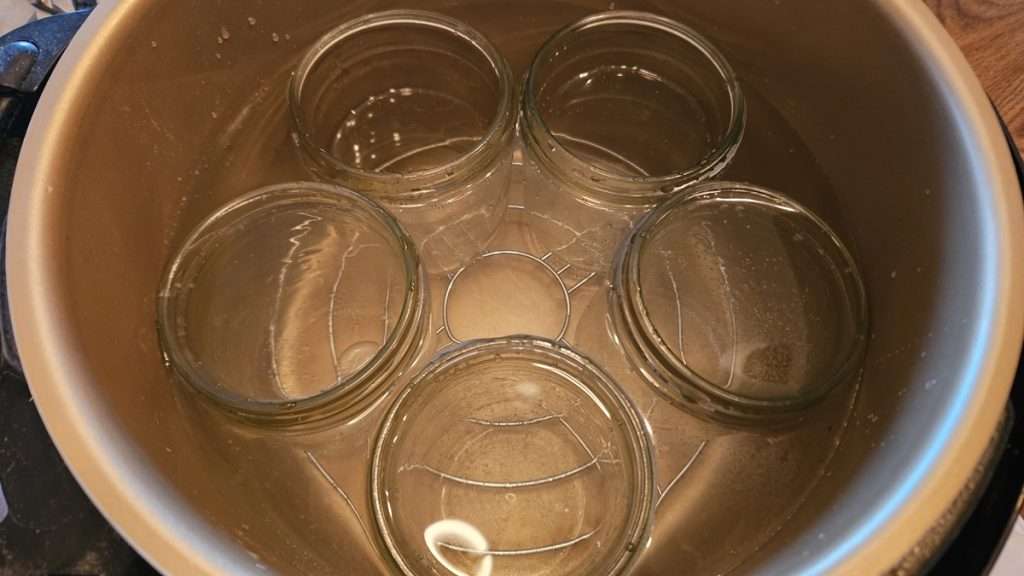
Water bath canning in the Nesco or any other type of canner requires a lot more water, compared to pressure canning.
As a general rule, I find that it takes around 22 cups of water to cover pint jars in my Nesco canner. I generally add about 16 cups of water to the canner, and then divide the remaining 6 cups of water between the jars.
Note that how you divide the water between the canner and the jars doesn’t have to be precise. The main thing is to put most of the water into the canner. Then put the remaining water into the jars to help weigh them down during the heating process.
Place the jars on the canning rack, and close the lid. Press “brown” and start. For a cold pack recipe, it takes about 16 minutes to reach 140°F. For a hot pack recipe, it takes about 28 minutes to reach 180°F.
Again, these times are estimates, as it depends to a large degree on the temperature of the water you start with. I like to run tap water as hot as possible before adding the water to my canner and jars.
Keeping the Jars and Water Hot
It’s essential to keep your jars warm until they’re ready to fill to avoid thermal shock and potential breakage. Once you’ve reached the desired temperature, you can press stop and leave the lid on to maintain the heat. When ready to fill the jars, dump the water from the jars into the canner to maintain the right water level.
Guidelines from Trusted Sources
The All New Ball Book of Canning and Preserving (Amazon) and the USDA Complete Guide to Home Canning (Amazon) both recommend using hot jars for raw pack recipes, and filling them with hot broth, water, syrup, or brine. Angi Schneider’s The Beginner’s Guide to Pressure Canning and Beyond (Amazon) provides specific temperature guidelines: 180°F for hot packs and 140°F for raw packs.
The bottom line is that even when doing a raw pack recipe, it’s important to heat the jars and water, but at a lower temperature compared to when hot packing.
Your All-in-One Canning Companion

The Home Canning Success System is your all-in-one canning companion. Whether you’re brand new or a seasoned canner, this book helps you plan, organize, and track your projects with confidence. Ditch the guesswork—preserve with purpose!
Conclusion
Heating your jars and water correctly in the Nesco canner is a crucial step in successful canning. By following these guidelines, you’ll ensure your jars are at the right temperature for both raw and hot pack recipes, reducing the risk of thermal shock and achieving better results.
If you found this guide helpful, please subscribe to my YouTube channel for more canning tips and tutorials. If you have any questions or topics you’d like me to cover, be sure to leave a comment on this video. Happy canning!
Nesco Canner & Cooker Resource Hub
Looking for more guides on using the Nesco Canner & Cooker? Visit my Nesco resource hub for safety information, canning methods, and step-by-step tutorials.
Related Articles
If you enjoyed this article, you are sure to enjoy these articles on canning in the Nesco (or Carey) canner.
💬 I’d love to hear from you!
Have you tried this yourself? Have a question or tip to share? Leave a comment below — your experience or question could help someone else, too!