

I recently got a great deal on blueberries, so I wanted to stock up on them. I canned blueberries, and also made blueberry jam, but there was no way we could use up all of the blueberries I purchased before they went bad. So, I decided to freeze blueberries.
Freezing blueberries is a super easy way to preserve blueberries, and the great thing about it is that you can later use the frozen blueberries in other ways, such as using them to make jam. I also love using frozen fruit in our morning smoothies, so I knew that as long as I could fit the blueberries into our freezers, they wouldn’t go bad.
A Step-By-Step Guide to Freezing Blueberries
This article includes affiliate links.
While it’s super easy to freeze blueberries, you don’t want to just dump blueberries into a container or Ziploc bag and stick them into the freezer. With that in mind, here are a few simple steps to successfully freeze blueberries.
Step 1: Clean the Blueberries
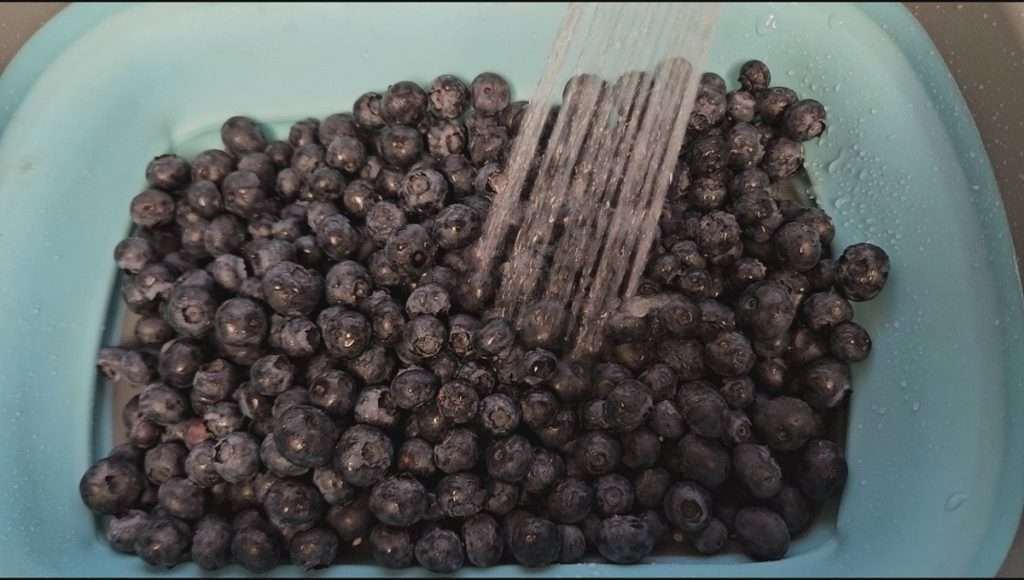
If, like me, you purchased blueberries from the grocery store, they should already be relatively clean. But don’t let that fool you! Whether they are organic or not, give them a good rinse. While you’re at it, remove any stems that may be attached, and discard any blueberries that are overripe or otherwise flawed.
Pro tip: I like using a colander to rinse the blueberries. I have this one (Amazon) that holds the blueberries above the sink. I prefer it to a colander that sits in the sink, because with the colander being held above the sink, there is no chance that the blueberries will end up sitting in a pool of water.
Step 2: Pat the Blueberries Dry
After letting the blueberries sit in the colander for a few minutes, gently shake the colander to drain off as much water as possible.
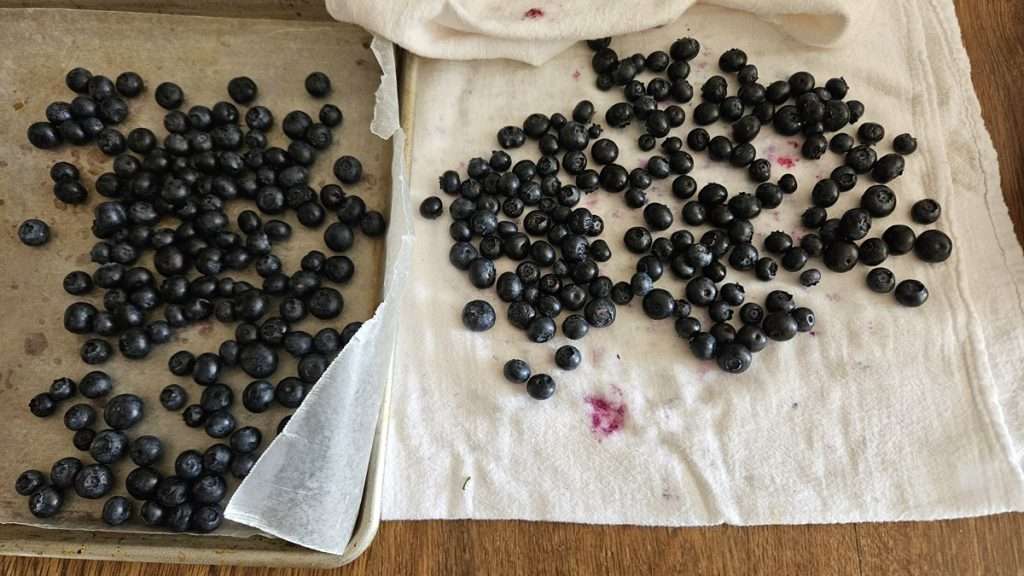
Next, place the washed blueberries onto a paper towel or flour sack towel and then pat the blueberries dry.
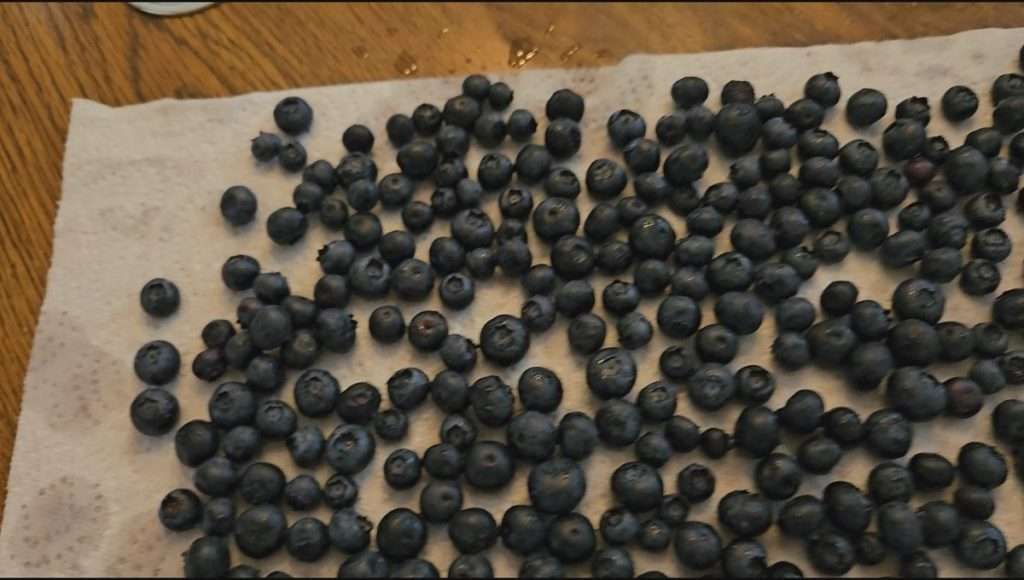
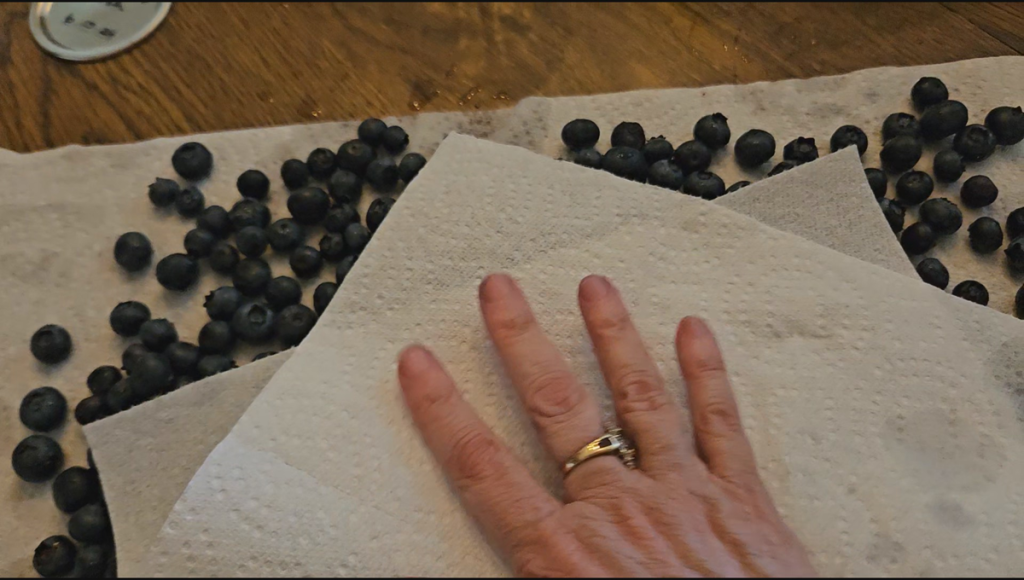
I started off with the paper towel method, but I found that the flour sack towels (Amazon) did a better job of absorbing water, so I recommend flour sack towels over paper towels.

Step 3: Flash Freeze the Blueberries
Once you’ve patted off the water off the blueberries, line a rimmed baking sheet with either parchment paper or waxed paper. Then, put the blueberries onto the baking sheet in a single layer, and pop it into the freezer.
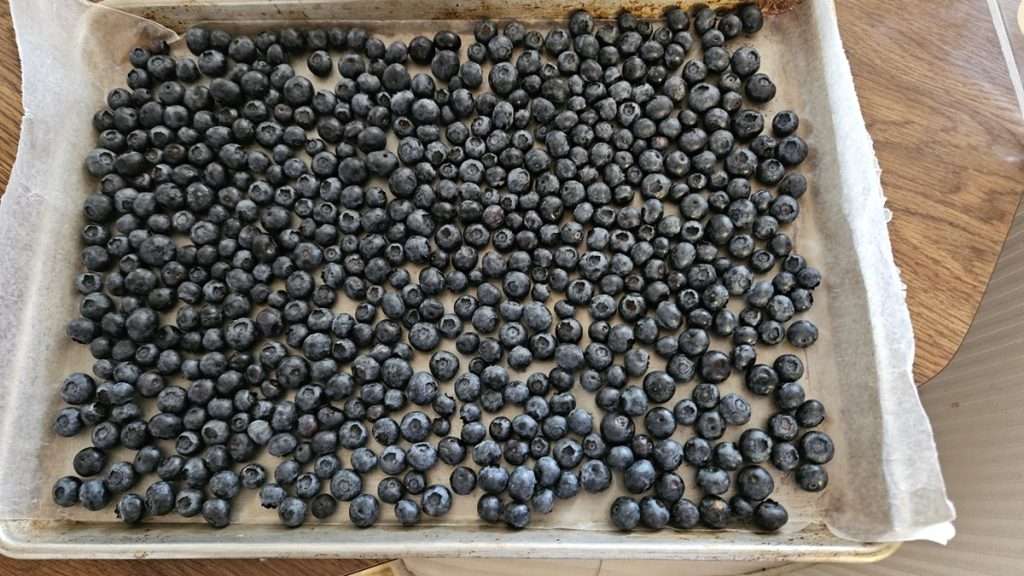
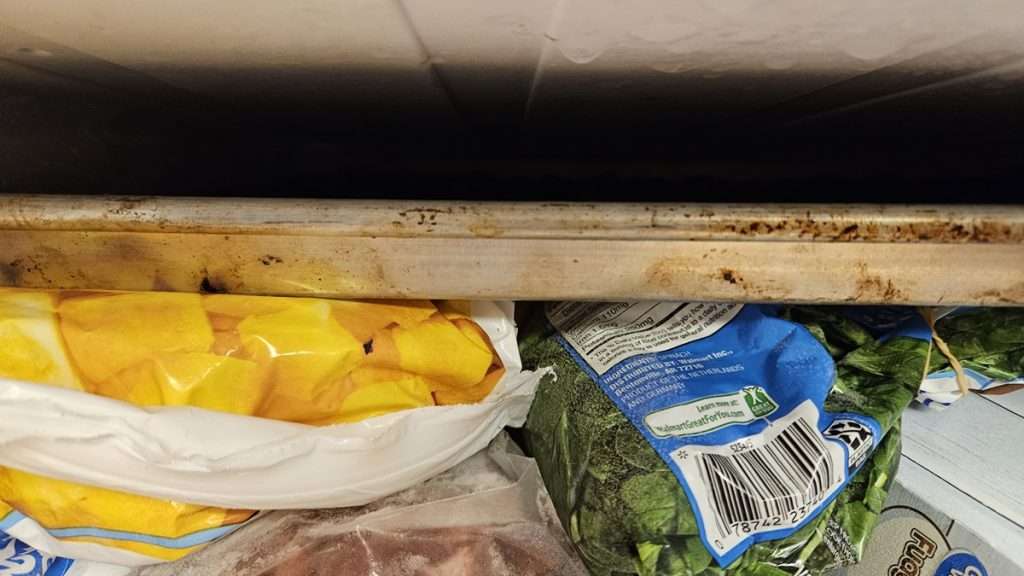
Allow the blueberries to freeze completely. They should be hard to the touch. If they are still soft, stick them back into the freezer . I found it took at least a couple of hours for my blueberries to freeze completely.
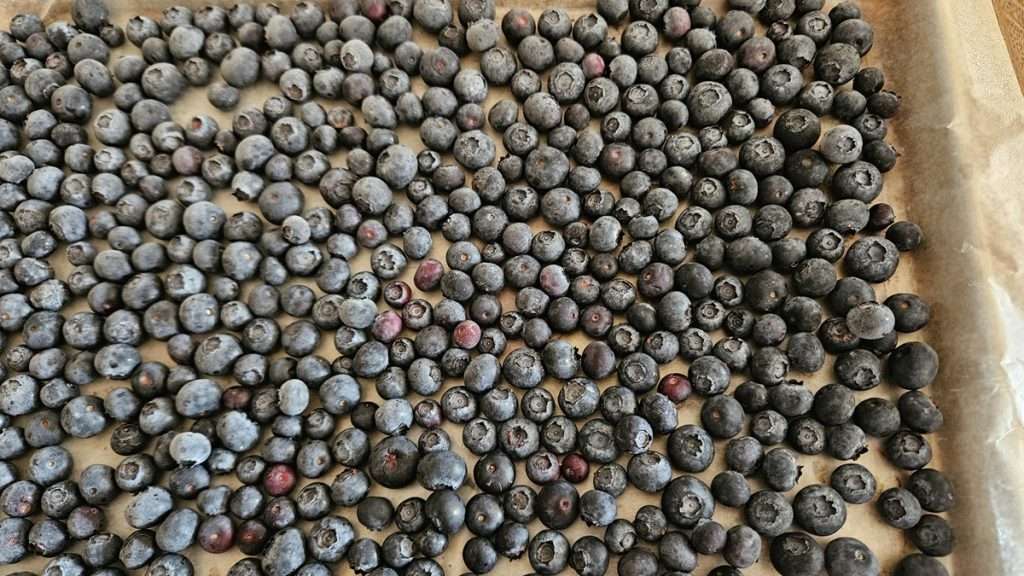
Note that it is very important to not double up any blueberries. Depending on how much room you have in your freezer and how many baking sheets you have, you may need to freeze multiple trays. Since I can only fit two trays into my freezer at a time, it took me two days to freeze all of the blueberries I purchased.
Step 4: Put the Blueberries into an Airtight Container
Once the blueberries are frozen solid, place them into a freezer container or zipper freezer bag. If you’re using a zipper freezer bag, squeeze as much air out of the bag as possible.
If you’re going to freeze them fairly long term, I recommend vacuum sealing them. Vacuum sealers come in a variety of sizes and prices, and for the most part, they all work the same. Here’s a sampling of vacuum sealers available on Amazon.
How to Use Frozen Blueberries
Frozen blueberries are super versatile, which is one reason I love having them on hand. Here are a few of my favorite ways to use frozen blueberries:
- Can them. While you’ll need to thaw them first, once thawed, you can can them. This makes them shelf stable and is a great way to preserve them if you need to make room in your freezer for other things. Read this article
- Make jam. Similar to canning, you also need to thaw the berries first, before using them to make jam. After that, it’s a cinch to make jam with previously frozen blueberries.
- Dehydrate them! Fresh blueberries can be a bit of a pain to dehydrate, because you have to break the skin first. This means either blanching or poking holes in them. But when you start with frozen blueberries, you can dehydrate them without any special treatment.
- Eat them frozen! Yes, frozen blueberries make a delicious snack. They remind me of fruity popsicles and are a great, healthy alternative to other frozen treats.
- Make pie or cobbler with them. Use any blueberry pie or cobbler recipe. Since most blueberry pie and cobbler recipes require you to cook the blueberries with sugar and some type of thickener, there is generally no need to thaw them first. Just know that you may need to cook them a bit longer when started with frozen blueberries.
- Put them in muffins or pancakes. I love tossing a handful of frozen blueberries into pancake or muffin batter. There’s not even any reason to thaw them first. They will start thawing as soon as you put them into the batter, and will become nice and juicy and piping hot as you cook (or bake) the pancakes or muffins.
- Put them in smoothies. My family has a green smoothie almost every morning for breakfast, and frozen blueberries are a great addition.
Conclusion
Blueberries are one of the easiest fruits to prepare for freezing. The thing I love the most about freezing blueberries is that it’s a great way to preserve them until you can get around to using them in some other way. So, if you find yourself with an abundance of blueberries, reduce the stress in your life and pop them in the freezer. This will buy you some time to use them in any way you desire in the future.
💬 I’d love to hear from you!
Have you tried this yourself? Have a question or tip to share? Leave a comment below — your experience or question could help someone else, too!