

Fresh figs are absolutely delicious—but they don’t last long. Unlike apples or oranges, which can sit in your fridge for weeks, figs have a very short shelf life. Once picked, they need to be eaten within a day or so before they start to go bad. That’s why it’s so important to eat them right away or preserve them as soon as possible. One of the easiest ways to preserve figs is to freeze fresh figs, which buys you time to enjoy them later in smoothies, jam, or other recipes.
Why Freeze Figs?
A few years ago, I bought a tiny fig tree—only about a foot tall at the time. Today, even with pruning, it’s at least ten feet tall and produces figs faster than we can eat them. Freezing figs has become essential in my kitchen so those precious fruits don’t go to waste.

Even if you don’t grow your own figs, you might have a neighbor or family member who gives you a big basket full of them. Or maybe you find them at the farmer’s market or grocery store for a limited time. Whatever the case, when you have fresh figs, you need to act quickly. Freezing figs is a fast, convenient way to preserve them for later.
I also have blog posts on How to Dehydrate Figs and How to Make and Can Fig Jam, but freezing is by far the quickest method. And best of all, frozen figs can still be turned into jam later—or enjoyed in a refreshing smoothie.

How to Freeze Fresh Figs (Step-By-Step)
Freezing figs is simple, and with just a little prep work, you can stock your freezer full of these sweet treats. Here’s exactly how to do it.
Step 1: Wash the Figs
Gently wash your figs under cool running water to remove dirt and debris.

Step 2: Dry the Figs Thoroughly
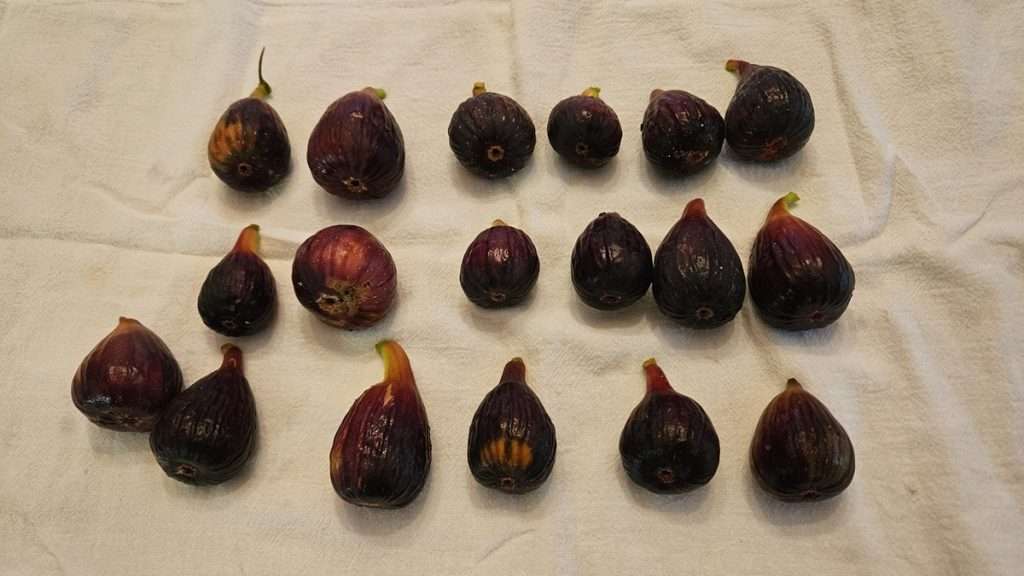
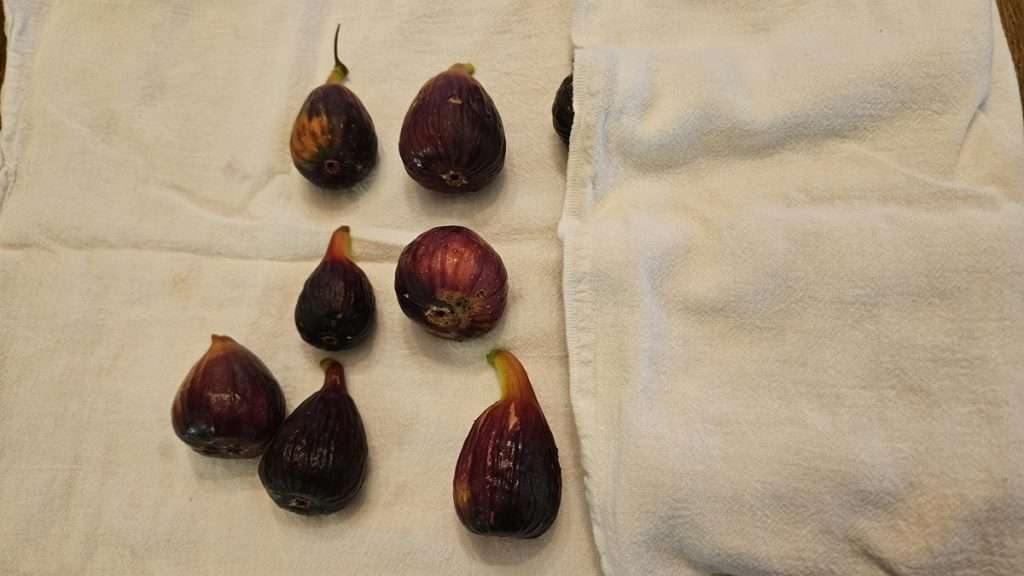
After washing, dry the figs well. I like using flour sack towels. Place the figs on one towel, then fold another towel on top and gently pat them dry.
Step 3: Remove Stems and Blemishes
Cut off the stem end of each fig, and trim away any blemishes or damaged spots.

Step 4: Cut Figs in Half
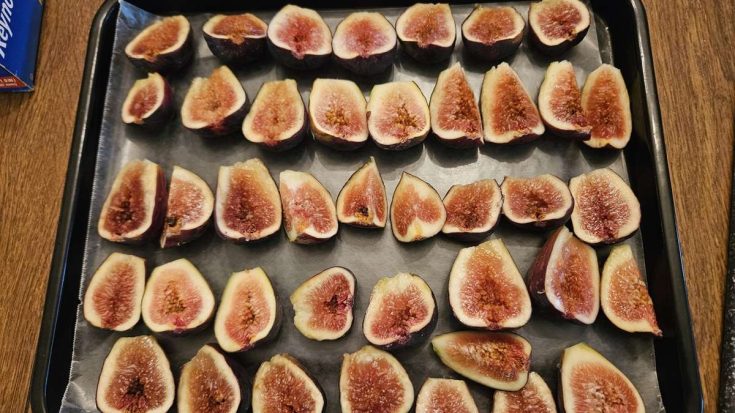
Cut figs in half for easier freezing and later use.

Step 5: Pre-Freeze on a Baking Sheet
Line a baking sheet with parchment or wax paper, then place the figs skin-side down. Freeze for at least 2 hours. This step prevents the figs from sticking together when stored.


Step 6: Label Freezer Bags or Containers
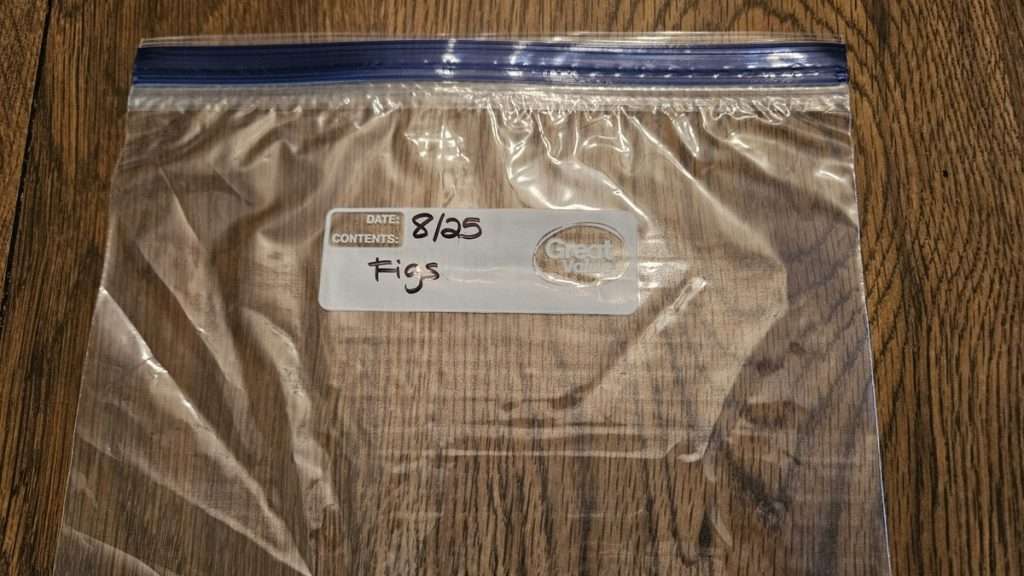
Before adding figs to storage bags or containers, label them with the contents and date. This makes it easier to keep track of what’s in your freezer.
Step 7: Transfer Figs to Bags or Containers
Once partially frozen, move the figs into freezer-safe bags or containers. Remove as much air as possible before sealing.

How Long Do Frozen Figs Last?
Properly stored frozen figs will last up to six months in the freezer without losing much flavor. Beyond that, they’re still safe to eat but may begin to lose quality.
How to Use Frozen Figs
Frozen figs are versatile. You can:
- Add them directly to smoothies for natural sweetness. This is my favorite way to use frozen figs!
- Thaw them to make fig jam (I’ve done this successfully).
- Use them in baked goods like muffins or quick breads.
- Blend them into sauces or glazes.
Freezing figs doesn’t take away their flavor—it just makes it easier to preserve your harvest (or market haul) for later.
Final Thoughts on How to Freeze Fresh Figs
Whether you grow your own figs, get them from a neighbor, or buy them from the market, freezing figs is one of the easiest ways to make sure none of those sweet fruits go to waste. It’s fast and simple, and leaves you with plenty of options later on—whether that’s a refreshing smoothie, homemade jam, or a baked treat.
Related Articles
If you enjoyed this article, you’re sure to enjoy these related articles.
If you’re looking for other ways to preserve figs, don’t miss my posts on How to Dehydrate Figs and How to Make Fig Jam.
Here’s are some other fruits I’ve frozen successfully:
Pin it for Later



Print it for Later
How to Freeze Fresh Figs
Learn how to freeze fresh figs quickly and easily so you can enjoy them later in smoothies, jam, or baked goods. Freezing figs is one of the easiest ways to preserve your harvest or market haul.
Materials
- Fresh figs
- Parchment paper or wax paper
- Freezer bags or containers
- Permanent marker (for labeling)
Tools
- Colander
- Flour sack towels (or paper towels)
- Cutting board
- Knife
- Baking sheet
Instructions
- Wash the Figs
Rinse fresh figs under cool running water to remove dirt and debris. - Dry Thoroughly
Place figs on a flour sack towel, fold another towel over the top, and gently pat them dry. - Remove Stems and Blemishes
Trim off the stem ends and cut away any blemishes or damaged spots. - Cut in Half
Slice figs in half for easier freezing and later use. - Pre-Freeze on Baking Sheet
Arrange figs skin-side down on a parchment- or wax-paper–lined baking sheet. Freeze for at least 2 hours, or until partially frozen. - Label Bags or Containers
Write the contents and date on your freezer bags or containers before filling. - Transfer to Bags or Containers
Once figs are partially frozen, transfer them to freezer-safe bags or containers. Remove as much air as possible before sealing.
Notes
💬 I’d love to hear from you!
Have you tried this yourself? Have a question or tip to share? Leave a comment below — your experience or question could help someone else, too!
What great timing. My tree is 3 feet tall and this is the first year I’ve had a number of figs. I’ve been eating them as they are ready, but I have a ton of green ones that probably be ready all at once. I want to freeze them to make a fig jam this winter. Thank you for your timely post.
Karen, thanks so much for your kind words. I can totally relate! Just wait until the next year or two – as the tree matures, you will really have a lot of figs! I have so many I am harvesting right now, and I’m so glad I can get them into the freezer without too much trouble. Previously, I put figs into a mason jar that I kept in my freezer door, and that worked fine, but they all frozen together in a clump. This way, I have more flexibility with how I use them. So far I haven’t used the ones that I’ve frozen this way, as I’m eating fresh what I can and freezing the rest. But they are looking good in the freezer, and have stayed separated, so I think that this is a better method than just throwing them into a mason jar. 😊