

When it comes to food dehydration, both the Cosori Mini Dehydrator and the Cosori Premium 6-Tray Stainless Steel Dehydrator have a sleek look and deliver strong performance.
This article includes affiliate links.
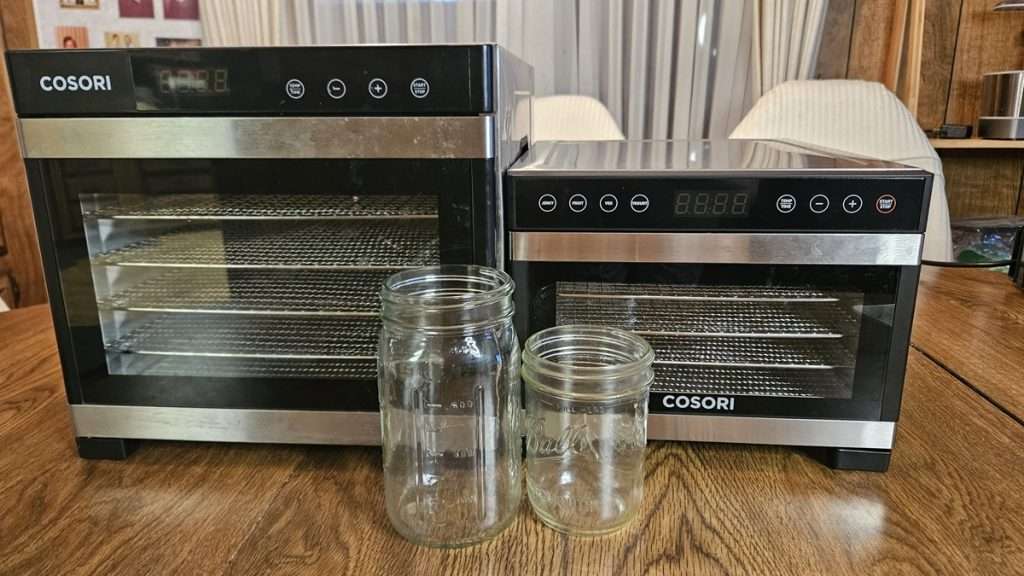
But depending on your space, batch size, and other preferences, one may be better suited to your needs. Let’s break down the differences so you can decide which is right for you.
Size and Portability
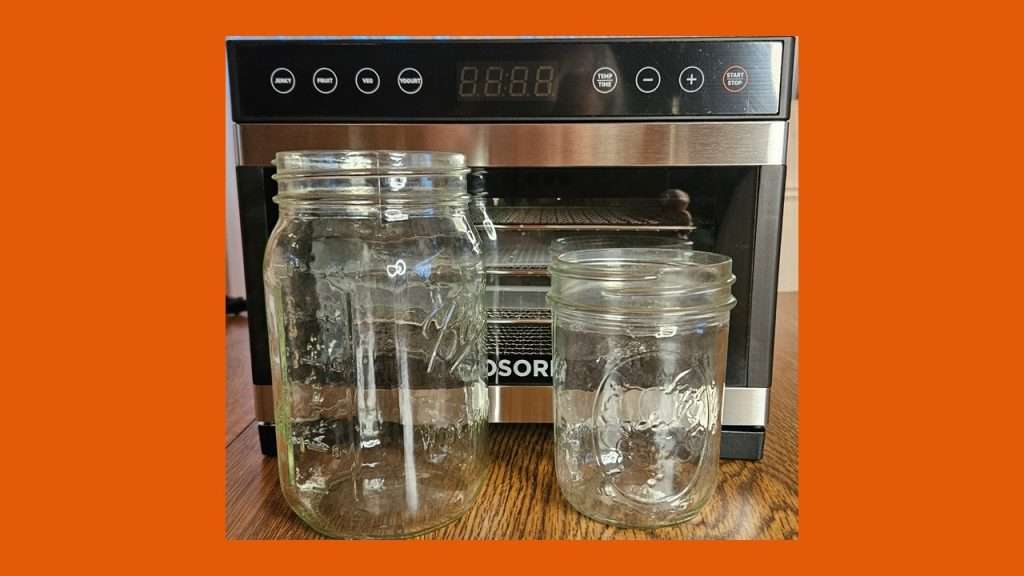
One of the most noticeable differences between these two Cosori dehydrator models is their size. The Mini 5-Tray Cosori Dehydrator (Amazon #ad) weighs just 10.7 pounds and is compact enough to sit comfortably on your kitchen counter, even in a small space. It’s easy to move around and store due to its lightweight design.
On the other hand, the Cosori 6-Tray Stainless Steel Premium (Amazon) dehydrator weighs closer to 20 pounds and has larger dimensions, making it less portable but offers more than double the drying capacity. While both dehydrators have similar construction and are equally durable, the larger 6-Tray model is heavier and more unwieldy when handling, due to its size.
Having said that, an added feature on the Cosori 6-Tray Premium Stainless Steel Dehydrator is the side handles, which make it relatively easy to lift, despite its bulkier size. This is especially useful when you need to move it around. I definitely appreciate the handles, since the 6-tray model is too large for me to keep out all the time. It is a little bit of a pain for me to move it into place when I need to use it, but the handles make it doable.
While the mini-dehydrator doesn’t have handles, it really doesn’t need them since it’s lightweight and easy to pick up and move if needed.
When it comes to portability, and being “countertop worthy” the Cosori 5-tray mini dehydrator wins. When it comes to drying capacity, the Cosori 6-tray premium stainless steel dehydrator wins.
Temperature Range and Wattage
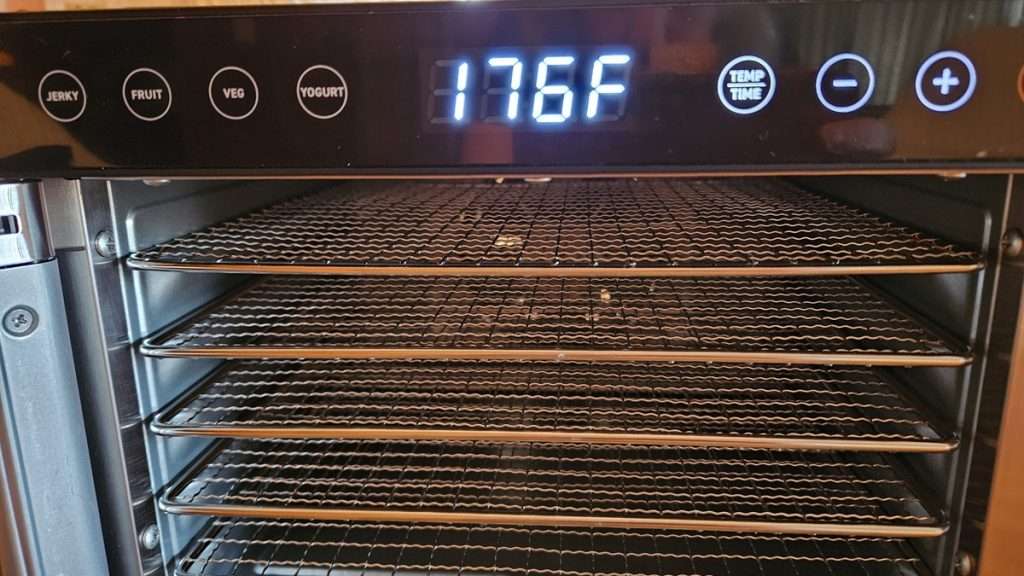
Both dehydrators offer adjustable temperature controls, but the Cosori Mini 5-Tray dehydrator has a slightly higher maximum temperature of 176°F, compared to 165°F for the Cosori 6-Tray dehydrator. This higher temperature can be advantageous for making jerky or other dehydrated meats, where safety is a concern.
In terms of power, the 6-Tray dehydrator has a higher wattage at 600W (Amazon), which supports its larger capacity and can handle bigger batches more efficiently. The Mini 5-Tray dehydrator (Amazon) operates at 485W, which is sufficient for its smaller size and ideal for small-batch dehydration.
Features and Presets
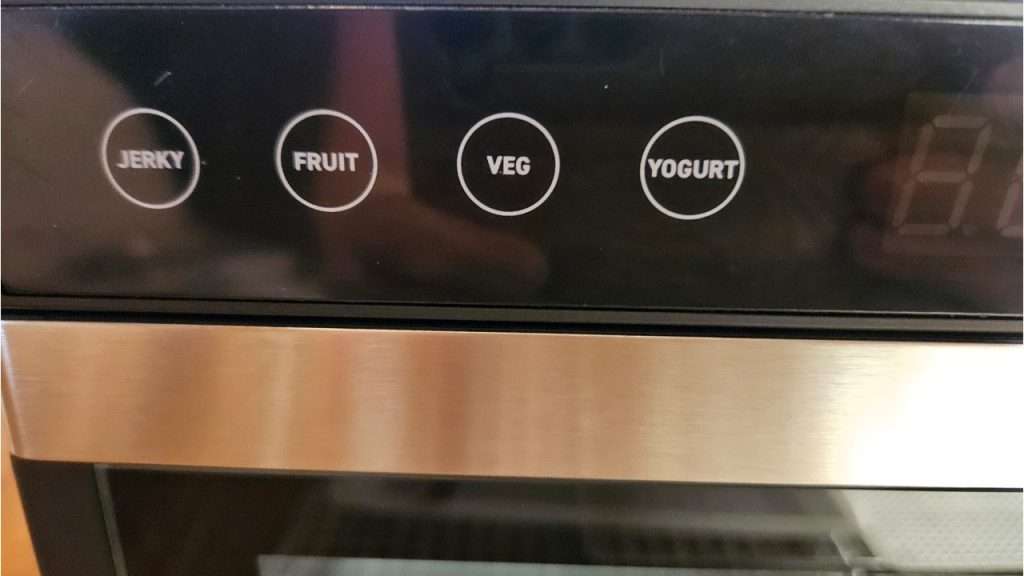
Both models come with digital timers that can be set for up to 48 hours, but the Mini 5-Tray dehydrator offers something extra—preset buttons for common dehydrating processes for jerky, fruit, veggies, and yogurt. These presets are customizable, simplifying the dehydration process for beginners. The Cosori 6-Tray Premium dehydrator doesn’t include these presets. Of course, you can manually set the temperature and time on either dehydrator.
While I plan to do quite a bit of experimenting with the presets on the Cosori 5-Tray Mini Dehydrator, there are a lot of factors that determine how long you actually need to dehydrate something. For instance, if you slice the food a bit thicker, or if the moisture content is higher, it will take longer to dehydrate. Even the temperature and humidity level in your home can impact dehydrating times. Because of this, the presets are a good starting point, but can’t be depended on completely.
Capacity and Trays
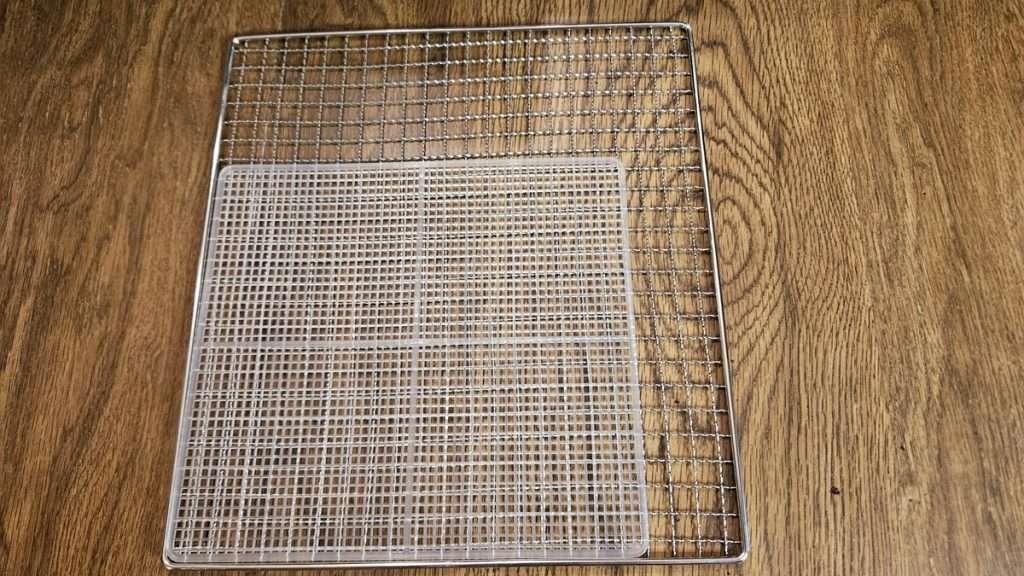
While the Cosori Mini 5-Tray comes with five trays and 3.1 square feet of drying space, the 6-Tray Premium dehydrator nearly doubles that with six trays and 6.5 square feet of drying space. If you frequently dehydrate large quantities, the 6-Tray model will save you time by allowing you to dry more food at once. However, if you typically work in smaller batches or have limited storage space, the Mini 5-Tray’s smaller capacity will likely be sufficient.
This small, easy-to-store vacuum sealer is made for mason jars. It’s cordless, simple to use, and a great tool for long-term food storage.
👉 Check it out here.
Specifications Comparison
| Feature | Cosori Mini 5-Tray | Cosori 6-Tray Premium Stainless Steel |
|---|---|---|
| Temperature Range | 95°F–176°F | 95°F–165°F |
| Wattage | 485 watts | 600 watts |
| Dimensions | 13.9 x 11.3 x 8.9 inches | 13.4 x 17.8 x 12.4 inches |
| Weight | 10.7 pounds | 19.2 pounds (approximately) |
| Number of Trays | 5 trays | 6 trays |
| Drying Space | 3.1 square feet | 6.5 square feet |
| Preset Functions | Jerky, Fruit, Veg, Yogurt | None |
| Timer | Up to 48 hours | Up to 48 hours |
What’s in the Box
| Item | Cosori Mini 5-Tray | Cosori 6-Tray Premium Stainless Steel |
|---|---|---|
| Trays | 5 Stainless Steel Trays | 6 Stainless Steel Trays |
| Fruit Roll Sheet | 1 | 1 |
| Mesh Screen | 1 | 1 |
| Recipe Book | Yes | Yes |
| User Manual | Yes | Yes |
| Warranty Card | Yes | Yes |
Which One is Right for You?
- The Cosori Mini 5-Tray Dehydrator (Amazon) is perfect if you have limited space or prefer to dehydrate smaller batches. It’s also great for people who want to keep their dehydrator out on the counter, ready for frequent use.
- The Cosori 6-Tray Dehydrator (Amazon) is a better fit if you have larger food preservation needs, whether you’re prepping for a big family or dehydrating bulk quantities of food for long-term storage.
Ultimately, both models offer great performance, but your choice will come down to your available space and how much food you typically plan to dehydrate at one time. For me, both have their place in my kitchen, and I’m glad to have the flexibility to choose between them depending on the task at hand.
Pin it for Later
Related Articles
If you enjoyed this article, be sure to check out these related articles.
💬 I’d love to hear from you!
Have you tried this yourself? Have a question or tip to share? Leave a comment below — your experience or question could help someone else, too!