What’s Inside: Learn how to make sweet potato apple fruit leather in a dehydrator using simple ingredients and warm fall spices. I’ll walk you through the process, share what went wrong with my first batch, and explain how spreading the puree thinner made a big difference in the finished fruit leather.
This article includes affiliate links.
It’s fall, and I am inundated with sweet potatoes and apples. I’m not complaining, especially since I got them dirt cheap, but I am looking for multiple ways to use them.
With that in mind, I pulled out one of my favorite food preservation books, The Ultimate Guide to Preserving Vegetables (Amazon) by Angi Schneider. I was actually looking for something to do with sweet potatoes when I came across her recipe for dried sweet potato and apple roll-ups.
What she calls roll-ups, I call fruit leather. Either way, they sounded like a delicious way to use up two of my favorite fall foods!
The process itself is pretty straightforward, but I ran into a problem when dehydrating the fruit leather. Thankfully, I had some leftover puree and was able to experiment a bit more.
In this article, I’ll walk you through the ingredients and process, including what went wrong with my first batch and the simple change that worked much better.
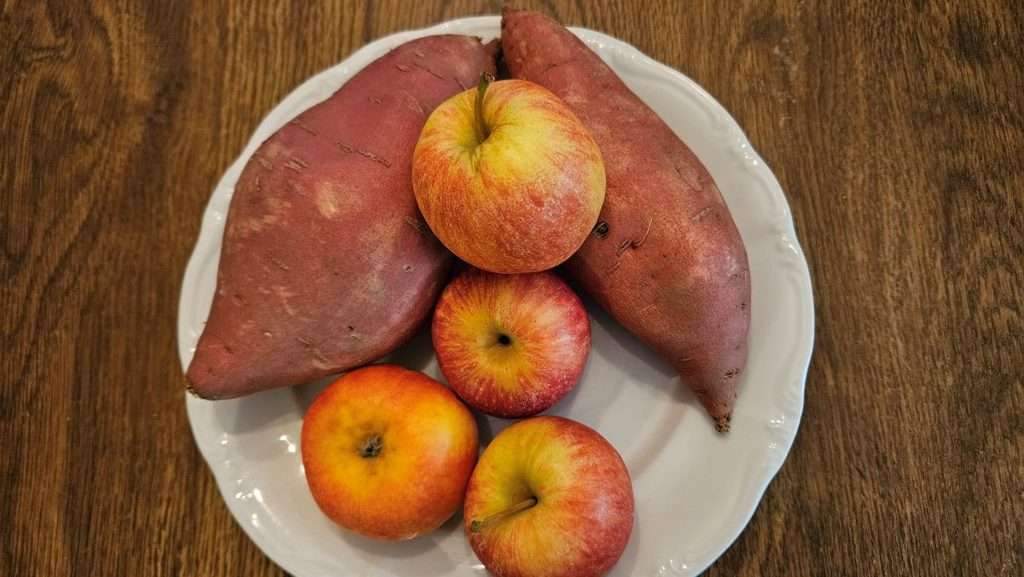
Sweet Potato Apple Fruit Leather Ingredients
The recipe I used is from The Ultimate Guide to Preserving Vegetables by Angi Schneider that you can pick up on Amazon. I made a small change by using honey instead of maple syrup.
For the complete ingredient measurements, check out the printable recipe card at the bottom of this post. In the meantime, here’s what you’ll need.
- Sweet potatoes: These make up the bulk of the fruit leather. They give it a naturally sweet flavor and a substantial texture.
- Apples: The apples add sweetness and a little tartness, balancing out the sweet potatoes.
- Water: You’ll need a small amount of water to cook the sweet potatoes and apples. The cooking liquid will also go into the blender.
- Maple syrup or honey: Either works to add a little extra sweetness. I used honey because that’s what I had available.
- Cinnamon: A wonderful spice to pair with both apples and sweet potatoes.
- Cardamom: This adds another layer of warm, fall flavor. If you don’t have cardamom, you can substitute ginger, nutmeg, or allspice.
One thing I especially like about this recipe is that it uses ingredients I typically have on hand, particularly during the fall.
How to Make Sweet Potato Apple Fruit Leather
Now that we’ve covered the ingredients, let’s get into the process of preparing the sweet potato and apple puree.
Prepare the Sweet Potatoes and Apples
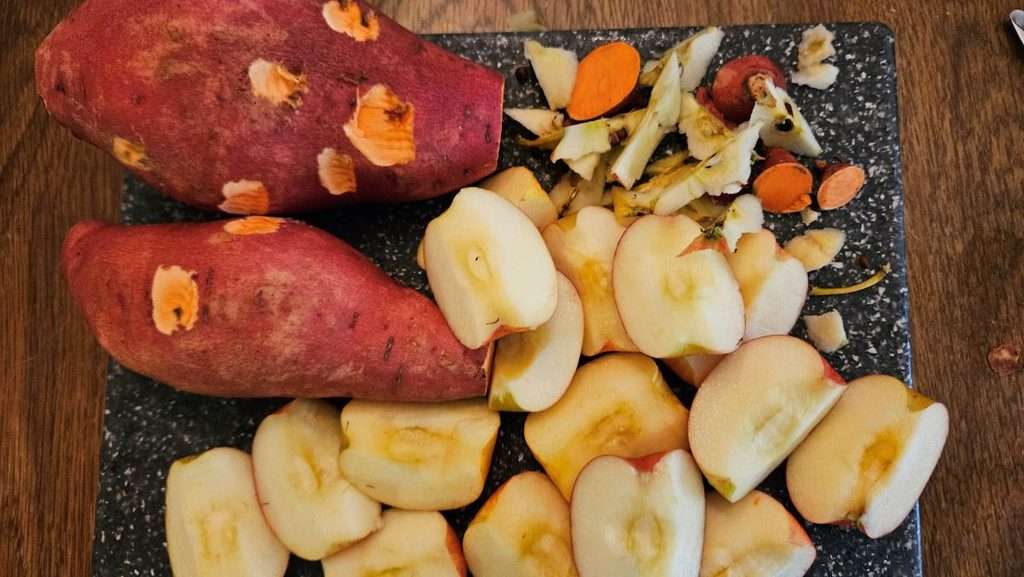
Start by washing the apples and sweet potatoes thoroughly. Cut off the ends of the sweet potatoes and remove any bad spots. Core the apples.
I decided not to peel either the sweet potatoes or the apples. The skins contain additional fiber and nutrients, and since everything will be pureed, I didn’t see any reason to remove them.
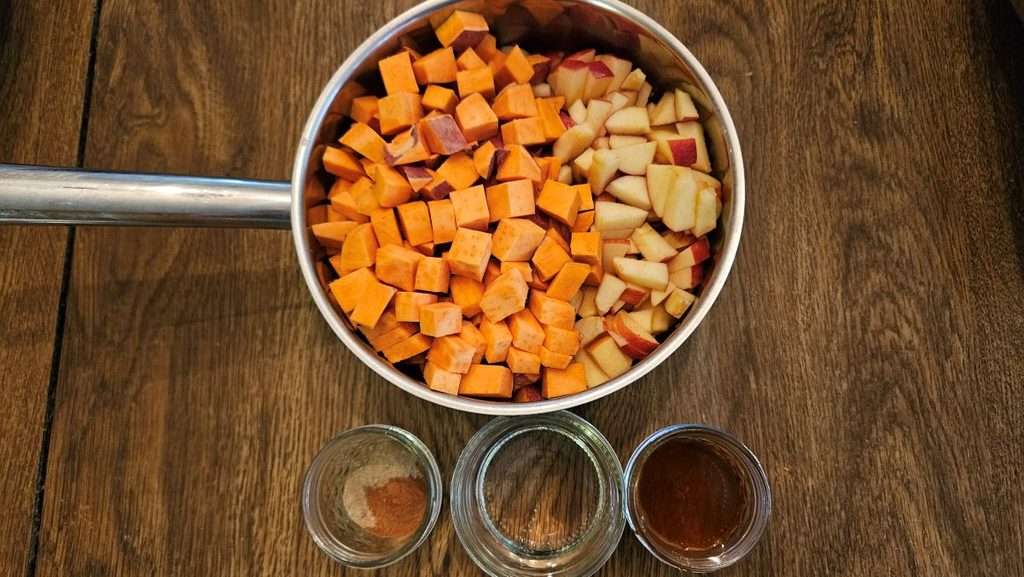
Next, cut the sweet potatoes and apples into approximately 1/2-inch chunks.
Try to keep the pieces fairly uniform so they’ll cook at about the same rate. Since sweet potatoes are firmer than apples, it’s particularly important to make sure they’re cut small enough to become completely soft during cooking.
Cook the Sweet Potatoes and Apples
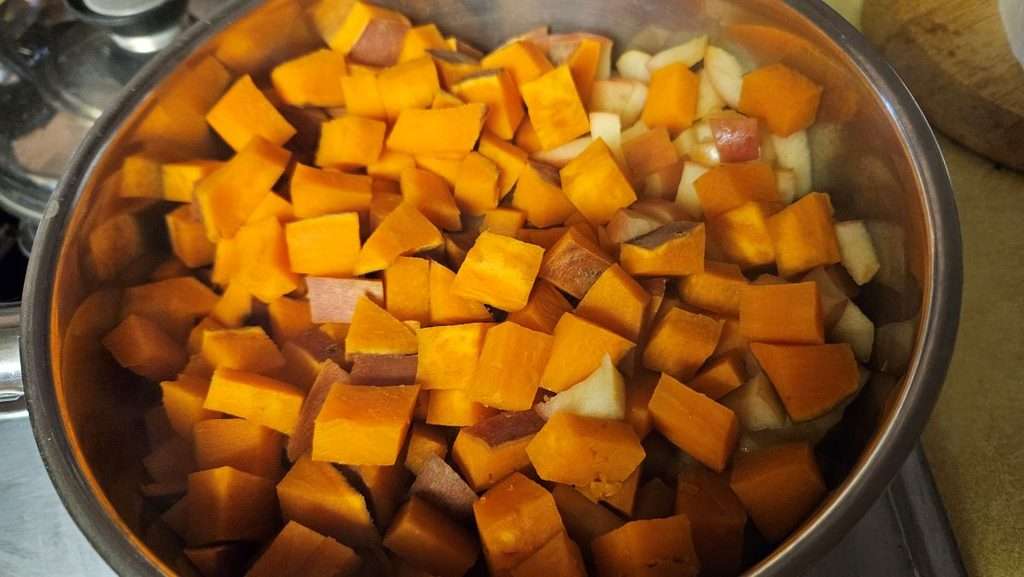
Put the chopped sweet potatoes and apples into a stainless steel pot, along with the water.
Turn the burner on high until the water comes to a boil. Since there isn’t much water in the pot, and it’s covered by the sweet potatoes and apples, you may not actually see it boiling.
In my case, I listened for the sound of simmering. Once I heard it, I turned the heat down as low as possible and put the lid on the pot.
The original instructions called for cooking the mixture for 25–30 minutes, until everything was very soft.
When I checked at 25 minutes, the sweet potatoes were cooked but not quite as soft as I wanted. I gave them another five minutes, but they still needed more time.
Since I was concerned about scorching, I added a little more water, replaced the lid, and continued cooking.
After approximately 35 minutes total, everything was nice and soft.
The important thing is to cook the sweet potatoes until they’re soft enough to blend into a smooth puree.
Blend the Sweet Potato and Apple Mixture
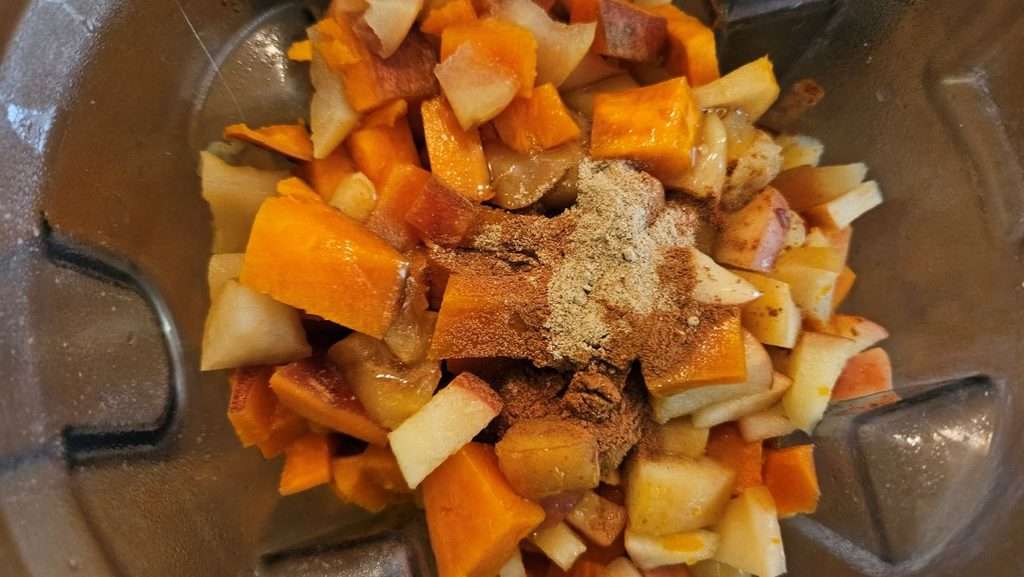
Once the sweet potatoes and apples are completely cooked, remove the lid and allow them to cool for about five minutes.
Transfer everything to a blender, including the cooking liquid.
Add the honey or maple syrup, cinnamon, and cardamom, or whichever warm spice you’ve chosen.
Blend until completely smooth.
I used my Vitamix, and it took about a minute to get a smooth consistency. Depending on your blender, it may take a bit longer.
If needed, stop the blender and scrape down the sides to make sure all of the sweet potato and apple pieces are thoroughly blended.
At this point, you should have a thick, smooth puree that’s ready to spread onto your dehydrator trays.
Spread the Puree on Dehydrator Trays
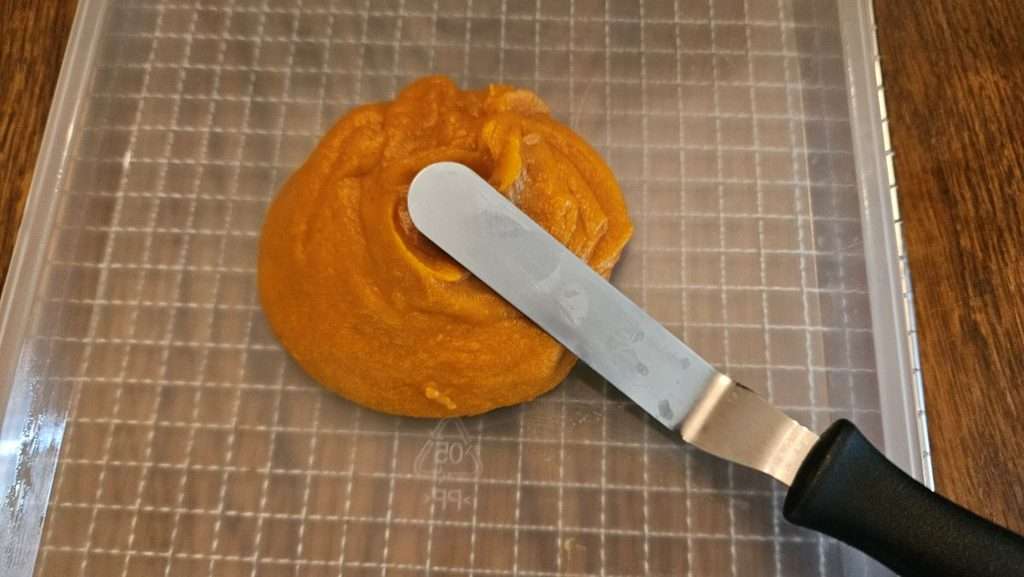
Now it’s time to spread the puree onto fruit leather trays or dehydrator-safe liners.
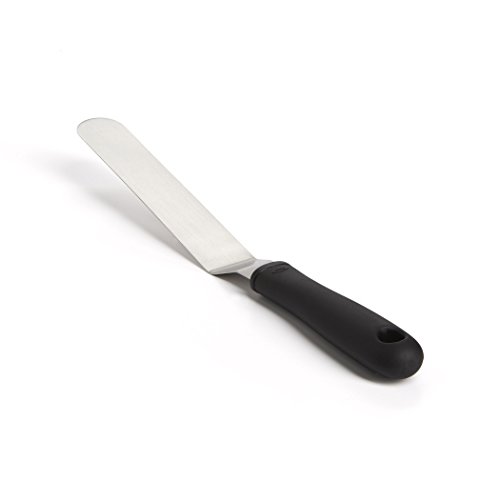
I highly recommend using an offset spatula for this step. It’s one of those simple tools that makes a big difference when you’re trying to spread puree evenly.
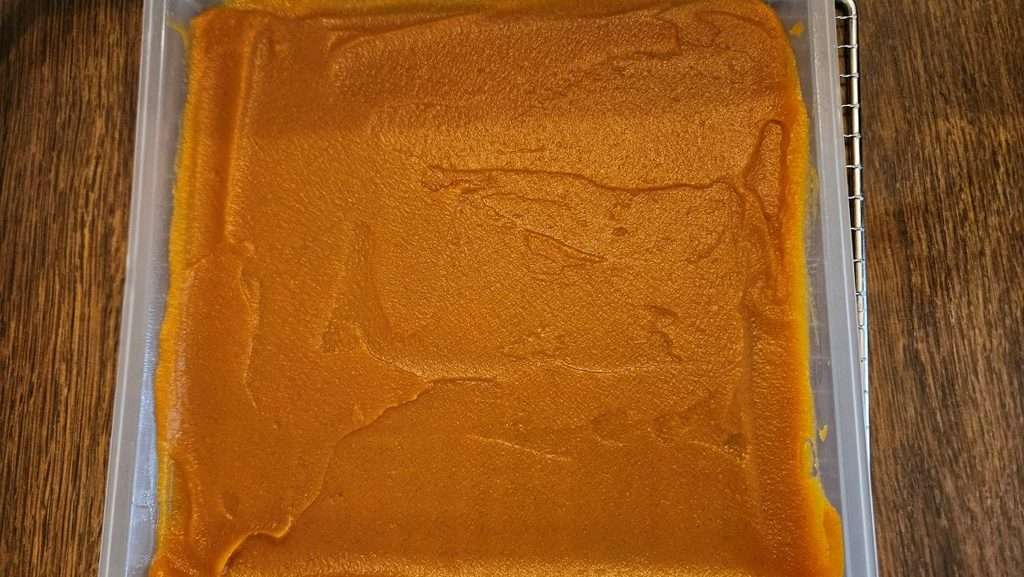
As you’ll see in a minute, it’s important not to spread the puree too thickly.
Unfortunately, that’s exactly what I did the first time!
The recipe indicated that I should end up with approximately four cups of puree, enough for two large fruit leathers.
However, I ended up with about 6 1/2 cups. That’s a pretty big difference, especially since I used the specified weights of sweet potatoes and apples.
Because electricity is expensive where I live, I generally prefer to run a full dehydrator rather than use a large one for just a couple of trays.
I decided to use my five-tray Cosori Mini dehydrator (Amazon) figuring it would be just right for this recipe.
As it turned out, I was wrong.
My First Attempt at Dehydrating Sweet Potato Apple Fruit Leather
Up to this point, everything seemed fine. I tasted the puree, and it had a good flavor. But the initial results weren’t what I expected.
Why My First Batch Cracked
I put approximately one cup of puree on each of the five Cosori Mini trays and used my offset spatula to spread it out.
The puree was pretty thick—approximately 1/4 inch in some places.
I put the trays into the dehydrator and set the temperature to 135°F.
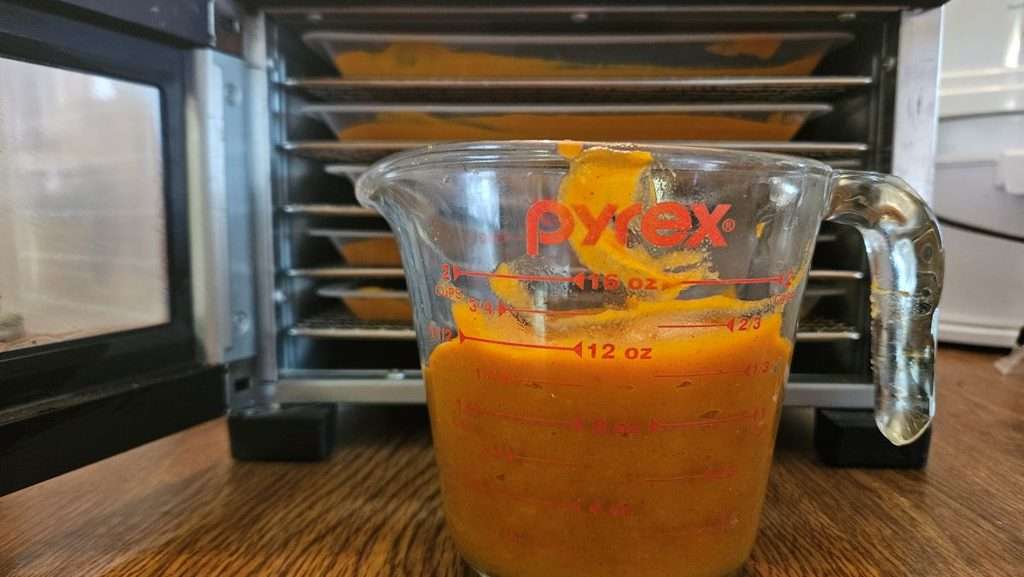
Even with that much puree on each tray, I still had about 1 1/2 cups left over! I put the extra puree in the refrigerator to use later.
After about 5 1/2 hours, I checked on the fruit leather.
I wasn’t expecting it to be completely dry, but I wanted to see how things were progressing.
And I wasn’t happy with what I saw.
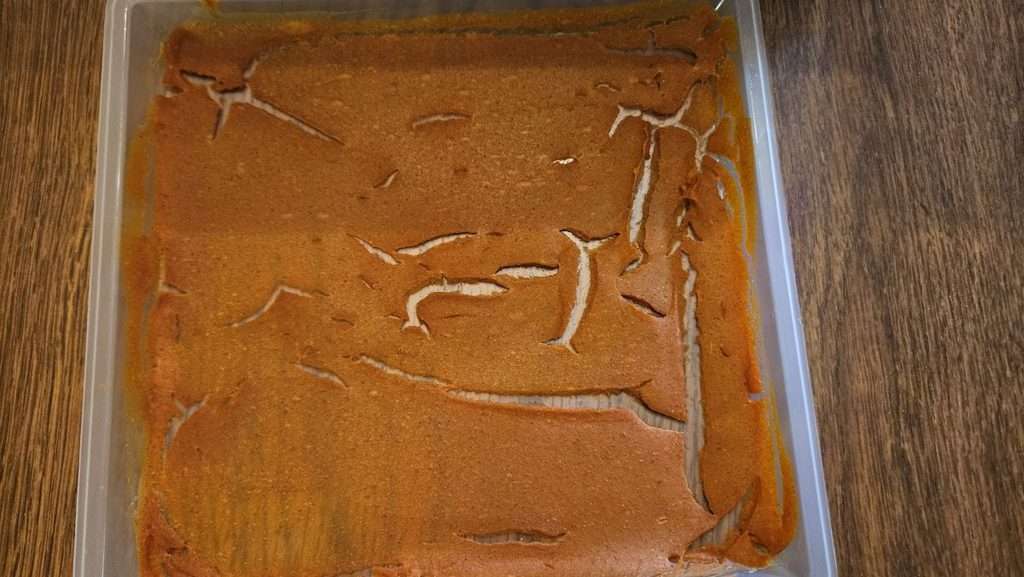
Instead of drying into a nice, smooth sheet of fruit leather, the puree had developed large cracks.
Some areas were starting to break into separate pieces.
This reminded me of what happens when I dehydrate mashed potatoes or pumpkin puree to make powder.
When I’m planning to powder something, cracks aren’t a problem. But when I’m making fruit leather, I want a flexible sheet that I can roll up!
The Fruit Leather Was Also Tough to Chew
After approximately another two hours, I checked the trays again. and it was completely dry
Thankfully it was easy to peel off the tray, but that’s where my good luck ended.
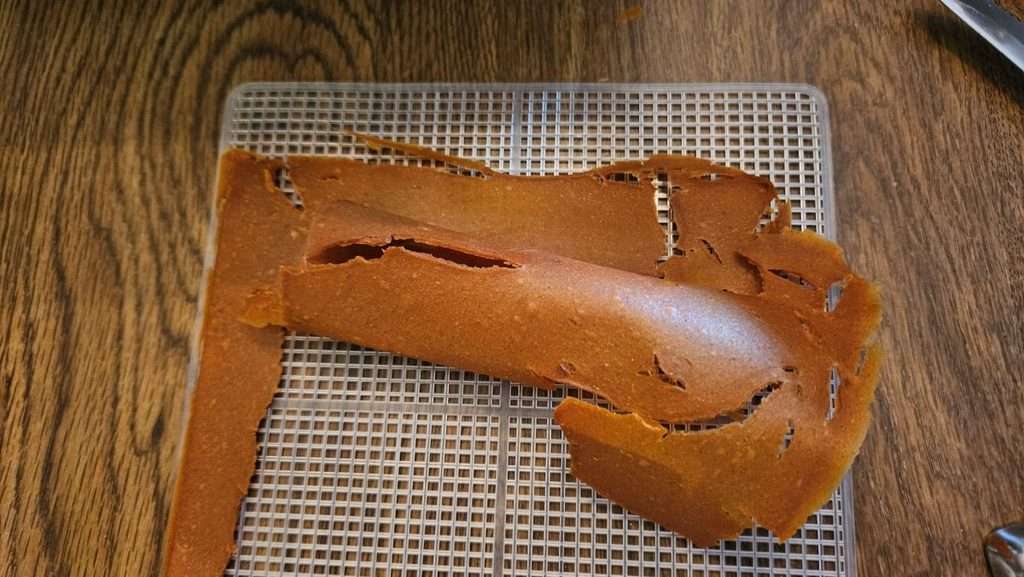
While I could roll it somewhat, it cracked as I tried to bend it.
I also tasted some at this point.
The flavor was good, but the texture wasn’t what I was hoping for. It was fairly stiff, tough, and a little difficult to chew.
Some of the other trays were still quite wet, so I let them continue drying overnight.
I suspected that spreading the puree too thickly was a big part of the problem.
Fortunately, I still had that leftover puree in the refrigerator, so I decided to try again using much less on each tray.
What Worked Better: Spreading the Puree Thinner
For my second attempt, I experimented with two different amounts of puree.
On one Cosori Mini tray, I spread 1/2 cup of puree. On another, I used just 1/3 cup.
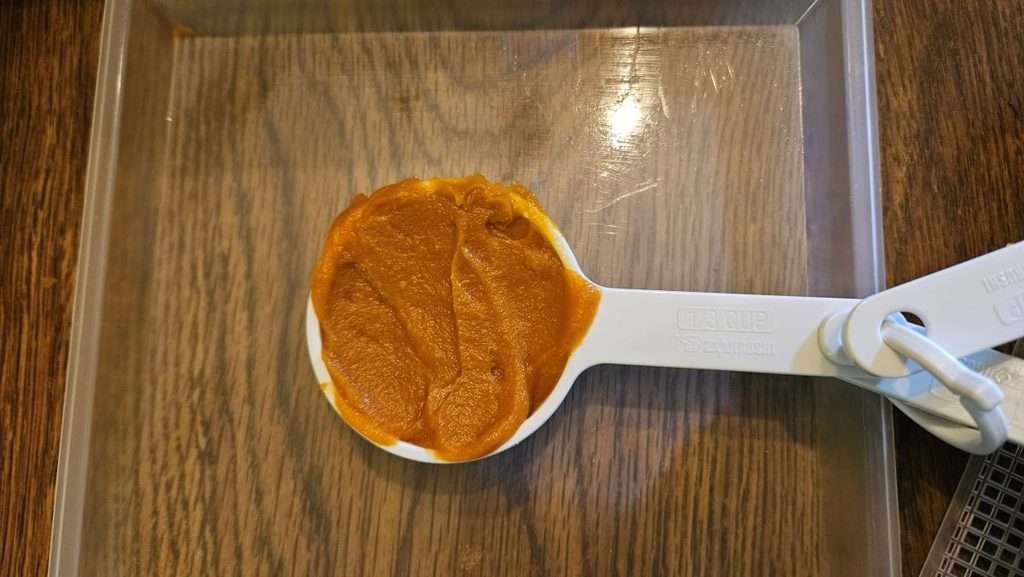
The difference was significant!
The tray with 1/3 cup of puree worked the best.
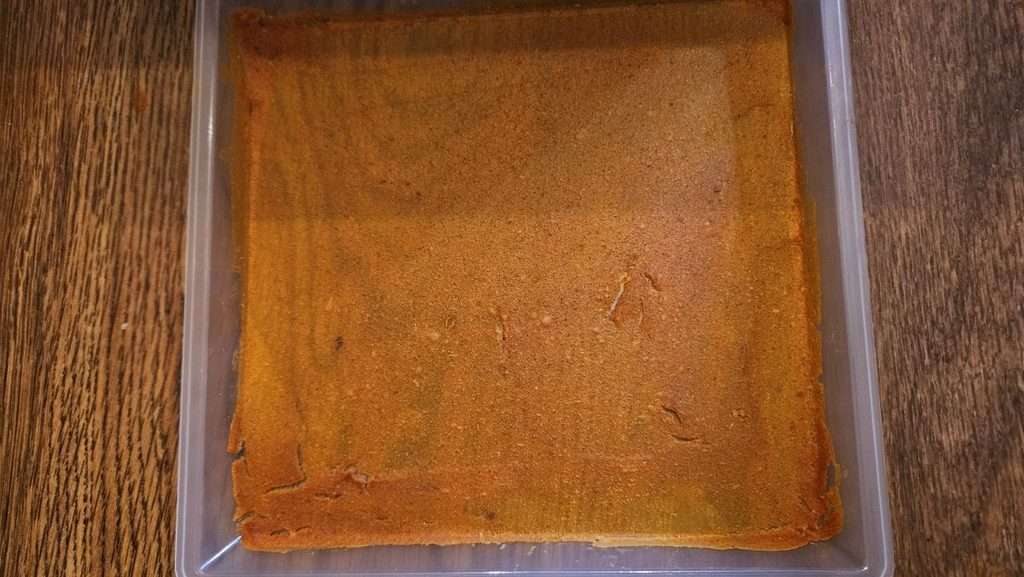
Instead of the large cracks I’d experienced with the first batch, the thinner puree dried into a much more even sheet.
And the best part?
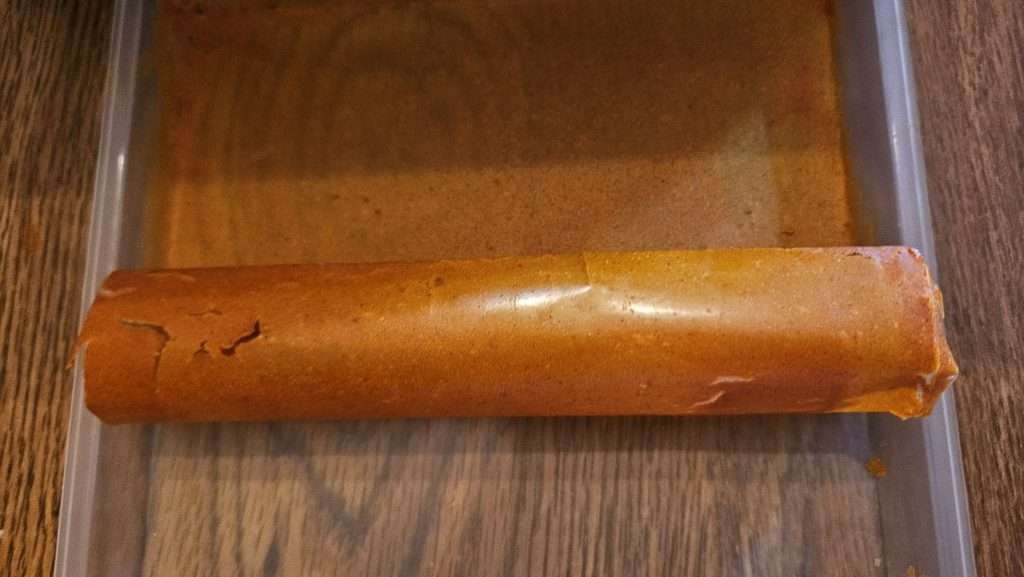
I was able to roll it up!
The thinner layer made a substantial difference in how the fruit leather dried and how flexible it was when finished.
While I’m sure there are other factors that can affect fruit leather texture, using less puree per tray is the first thing I’ll change the next time I make this recipe.
How Much Sweet Potato Apple Puree Should You Use Per Tray?
One thing that can make fruit leather recipes confusing is that dehydrator trays come in different sizes.
For example, the original recipe called for two cups of puree per tray. That makes sense for a large tray, such as those used in an Excalibur dehydrator, but it’s far too much for either of my Corsori dehydrators.
Based on my experiments with the Mini and the approximate drying areas of my other dehydrators, here are the amounts I would start with:
- Cosori Mini 5-tray: 1/3 – 1/2 cup per tray. This is the amount I tested, and it worked well.
- Cosori stainless steel 6-tray: Approximately 1 cup per tray
- Excalibur 9-tray: Approximately 1 2/3–1 3/4 cups
Keep in mind that the amounts for the two larger dehydrators are estimates based on tray size. I haven’t tested this particular puree in those dehydrators yet.
Also, the usable surface area of your fruit leather liners may be smaller than the dehydrator trays themselves.
The most important thing is to spread the puree in a relatively thin, even layer rather than focusing only on a specific measurement.
I would aim for approximately 1/8 inch thick, or a little thinner if the puree is particularly thick.
How Long Does Sweet Potato Apple Fruit Leather Take to Dehydrate?
I dehydrated my first batch at 135°F, but the National Center for Home Food Preservation recommends 140°F for fruit leather.
For typical fruit leathers, six to eight hours is a general starting point, although the actual drying time varies depending on the thickness of the puree, the ingredients, the dehydrator, and the humidity in your home.
I recommend checking the trays periodically rather than relying on a specific number of hours.
The finished fruit leather should:
- Feel dry rather than wet or mushy.
- Have no visible indentation when you press the center.
- Peel away from the liner without leaving wet puree behind.
- Be flexible enough to bend or roll without breaking apart.
If some areas are still wet or sticky while others are dry, continue dehydrating until it is completely dry.
How to Store Sweet Potato Apple Fruit Leather
Once the fruit leather is completely dry, remove it from the dehydrator and allow it to cool.
You can roll it with food-safe parchment or plastic wrap to keep the layers separated, then place the rolls in an airtight container.
And, as with any dehydrated food, make sure it’s thoroughly dry before packaging it. Remaining moisture can lead to mold during storage.
Final Thoughts on Making Sweet Potato Apple Fruit Leather
Overall, I’m glad I gave this recipe a try. The combination of sweet potatoes, apples, honey, and warm spices makes a tasty fall snack, and it’s another way to use up an abundance of seasonal produce.
My biggest takeaway from this experiment is that when it comes to making fruit leather, the amount of puree you put on each tray really matters.
I initially thought that using more puree would simply result in thicker fruit leather that took longer to dry. Instead, I ended up with fruit leather that cracked and was difficult to chew.
Thankfully, using a thinner layer worked much better.
Next time, I’ll use my larger Cosori dehydrator and spread the puree much thinner from the start. Even if I need more than one batch, I think the improved texture will be worth it.
If you enjoy making fruit leather, you may also like my tutorials on cherry fruit leather, cranberry fruit leather, and grape fruit leather.
And if you try this sweet potato apple fruit leather recipe, I’d love to hear how it turns out for you, especially how much puree you use on your dehydrator trays!
Related Content
If you enjoyed this article, you are likely to enjoy these related articles:
- How to Freeze Apples Step By Step
- Canning Apples in Syrup
- Dehydrating Cinnamon Sugar Apples
- How to Can Sweet Potatoes in Cinnamon Syrup
Sweet Potato Apple Fruit Leather
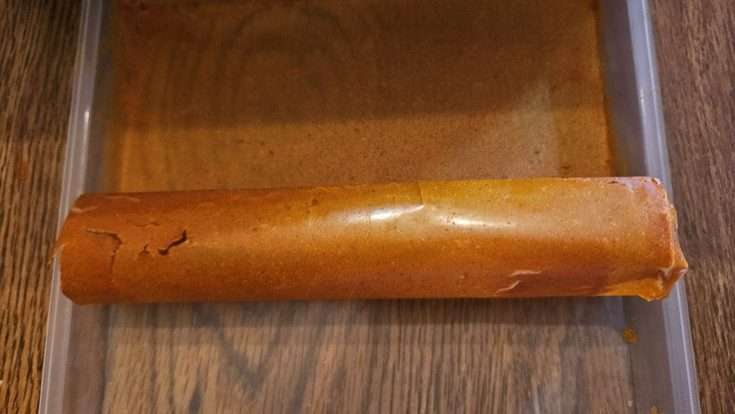
This sweet potato apple fruit leather combines sweet potatoes, apples, honey, and warm spices for a delicious homemade snack. Learn how to prepare the puree, dehydrate it, and get the right thickness for fruit leather that rolls up without cracking.
Ingredients
- 2 pounds sweet potatoes
- 1 pound apples
- 2/3 cup water
- 2 tablespoons honey or maple syrup
- 1 teaspoon ground cinnamon
- 1/2 teaspoon ground cardamom
Instructions
- Prepare the produce. Wash the sweet potatoes and apples thoroughly. Trim the ends and remove any bad spots from the sweet potatoes. Core the apples. Leave the skins on both, and cut into approximately 1/2-inch pieces.
- Bring to a boil. Place the chopped sweet potatoes and apples in a large saucepan with the water. Heat on high until the water begins to boil. Reduce the heat to very low and cover the saucepan with a lid.
- Cook until soft. Simmer for approximately 25–35 minutes, or until the sweet potatoes and apples are very soft. Check occasionally and add a little more water if needed to prevent scorching.
- Blend the ingredients. Remove the lid and allow the mixture to cool for approximately 5 minutes. Transfer the sweet potatoes, apples, and cooking liquid to a blender. Add the honey or maple syrup, cinnamon, and cardamom. Blend until completely smooth, scraping down the sides as needed.
- Spread on dehydrator trays. Line dehydrator trays with fruit leather sheets or suitable nonstick liners. Spread the puree in a thin, even layer using an offset spatula. For the Cosori Mini, approximately 1/3 cup per tray worked well. Larger trays will accommodate more puree.
- Dehydrate. Place the trays in the dehydrator and set the temperature to 135°F. Dehydrate until the fruit leather is dry throughout, with no wet spots, and peels easily from the liner. The finished fruit leather should be flexible enough to roll without cracking.
- Cool and store. Allow the finished fruit leather to cool completely. Peel it from the liners, roll it up with food-safe parchment paper, and store in an airtight container in the refrigerator or freezer.
Notes
Recipe Notes
- Puree thickness: Spreading the puree too thickly can cause the fruit leather to crack and become tough. For my Cosori Mini dehydrator, 1/3 cup of puree per tray worked well, while 1 cup was far too much. Adjust the amount based on the usable surface area of your dehydrator trays.
- Drying time: Drying time varies depending on your dehydrator, the thickness of the puree, and humidity levels. Check periodically and continue drying until the fruit leather is dry throughout and flexible enough to roll.
- Spice substitutions: If you don't have cardamom, try ginger, nutmeg, or allspice. Honey and maple syrup are interchangeable in this recipe.
- Additional water: If the sweet potatoes and apples begin to dry out during cooking, add a little more water to prevent scorching.
- Storage: Store the completely cooled fruit leather in an airtight container in the refrigerator, or freeze it for longer storage.
Adapted from the Sweet Potato and Apple Roll-Ups recipe in The Ultimate Guide to Preserving Vegetables by Angi Schneider.
Recommended Products
As an Amazon Associate and member of other affiliate programs, I earn from qualifying purchases.